NAWM Members
Members receive weekly issues of Insider’s Edition and bimonthly issues of Wetland News per year. If you are a member already, you may read the latest issue of Insider’s Edition and Wetland News (NAWM’s membership newsletter) by logging in to your Members Portal. NAWM membership benefits information.
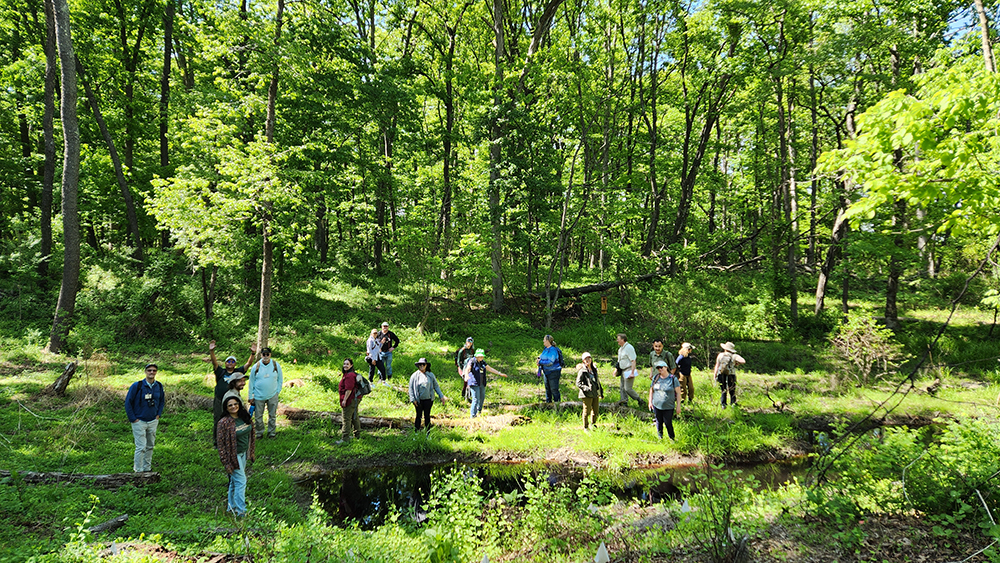
NAWM is looking for photos of our members working in the field—whether inside or outside, regulation or restoration, monitoring & assessment—or mapping & management of wetland resources. We would like to feature photos of wetland professionals doing a wide range of activities in the field of wetland science, policy and management. Please email these photos to Laura at laura@nawm.org for use on the NAWM website and/or in our membership newsletter, Wetland News.
Member Spotlight
The NAWM membership includes state, tribal, federal, and local wetland managers, regulators, researchers, field scientists, academics, private consultants, and more. These wetlanders work across the United States in a wide variety of wetlands and related aquatic resources. To celebrate the important work that NAWM members are doing, each month NAWM shines the Member Spotlight on one member to learn more about the good work they are doing to protect and restore our wetland resources, how they came to work in wetlands, and how being a member of the Association benefits their work. If you would like to nominate a member for a future Member Spotlight, please reach out to Portia Osborne, NAWM Executive Director, at portia@nawm.org. View Member Spotlight Archive.
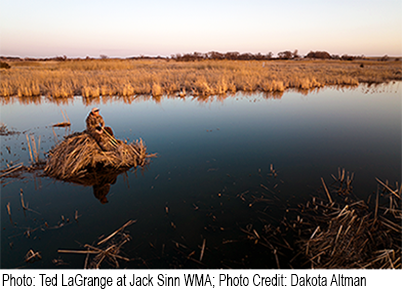
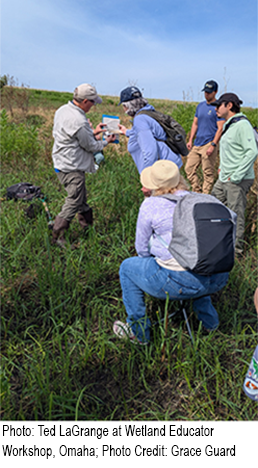
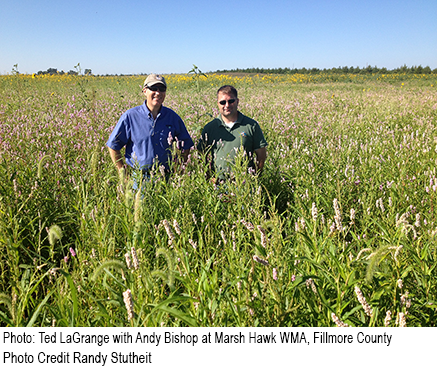
Ted LaGrange is the Wetland Program Manager for the Nebraska Game and Parks Commission.
Who do you work for and what is your current position?
I work as the Wetland Program Manager for the Nebraska Game and Parks Commission.
What is your favorite part of your job?
I love that I get to work on a wide variety of different wetland types throughout Nebraska, and with a wide array of people who are interested in wetland conservation.
What is one of your biggest professional accomplishments?
I certainly am proud of the wetland restoration projects that have been completed, and the outcomes from the Wetlands of Nebraska Outreach and Education project. However, any accomplishments are the result of the work of many different people and partners, so the relationships I have established and maintained over the years are probably the biggest accomplishment and will pay dividends into the future.
What is your favorite wetland, or type of wetland, or wetland species? Why?
I honestly don’t have a favorite. I love them all, and enjoy visiting them across the state, through the seasons, and over the years.
How did you end up working in wetlands?
I grew up in an outdoor-oriented family. I knew that I wanted to work as a wildlife biologist when I was in grade school. I narrowed that down to waterfowl and then wetlands, when I was in Junior High!
What advice do you have for someone interested in getting started in wetlands work?
Make connections and maintain those connections. The wetland community is fairly small, and there are not many degrees of separation within our field, so do your best and keep connected.
How long have you been a member of NAWM? How have you participated in NAWM?
At least 25 years. I have participated in the annual meetings and given presentations and served on panels at the meetings. I have been a presenter or co-presenter in at least 5 NAWM webinars and was a member of NAWM workgroups about wetland communication, ESTP, restoration, and NRCS planning.
What is your favorite benefit of being a member of NAWM?
The communications provided and the sense of being a part of a community of people who care deeply about wetlands.
What is your favorite NAWM memory?
The annual meetings are always fun!
If you would like to nominate a member for a future Member Spotlight, please reach out to Portia Osborne, NAWM Executive Director, at portia@nawm.org.